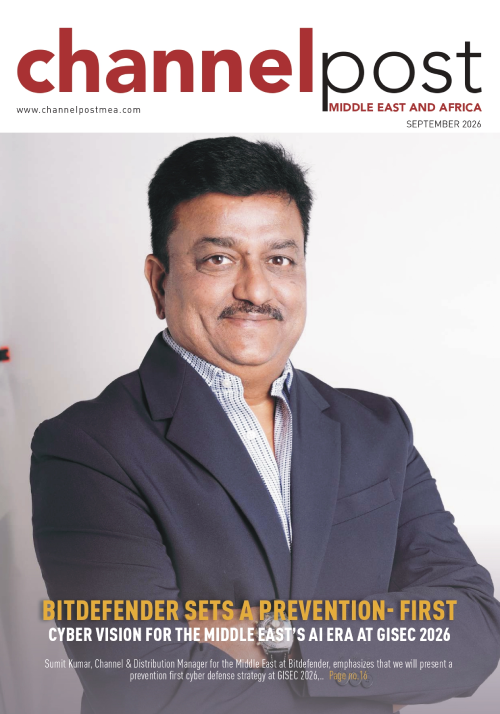










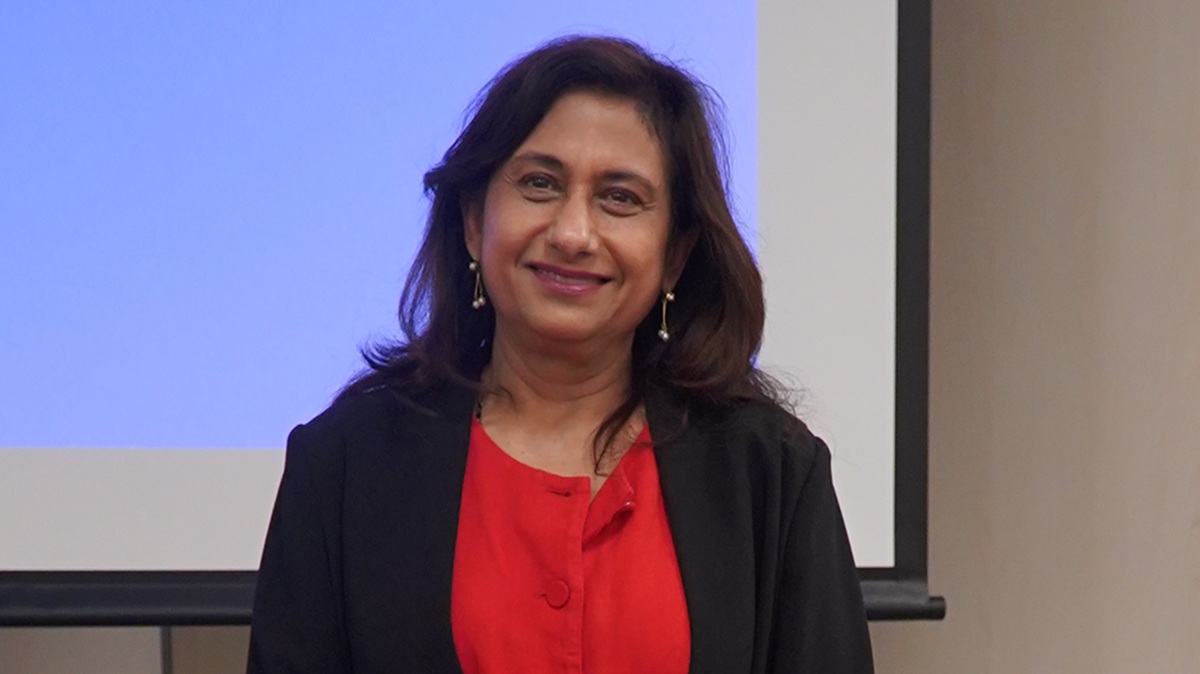
Subela Bhatia, Founder and Managing Director of IMPERIUM Middle East, emphasises that the Middle East must shift from fragmented tools to AI-driven, sovereign-cloud-aligned, outcome-based security models led by integrators who co-own resilience and readiness.
How are enterprise cybersecurity priorities evolving today, especially with the rise of AI-driven threats and hybrid infrastructure?
Enterprise cybersecurity priorities are undergoing one of the most significant shifts in the last decade. Organisations no longer defend fixed, well-defined perimeters; instead, they manage dynamic, constantly shifting attack surfaces spanning on-premise data centres, multi-cloud environments, remote workforces, and increasingly complex OT ecosystems. The rise of AI has accelerated this evolution dramatically. AI has become a dual-force in cybersecurity: attackers are using it to generate highly convincing phishing campaigns, automate vulnerability discovery, and execute deepfake-driven social engineering at a scale and sophistication that traditional defenses struggle to match. At the same time, defenders are leveraging AI to enhance detection, reduce noise, and accelerate response.
Hybrid infrastructure has pushed identity to the forefront, making it the new perimeter. As organisations distribute workloads across cloud and on-premise environments, identity becomes the single consistent control plane. Zero trust has therefore moved from an aspirational framework to an operational necessity. It is no longer a concept discussed in boardrooms; it is a practical, day-to-day requirement for securing modern enterprises.
CISOs are shifting from reactive, compliance-driven postures to proactive, intelligence-led strategies. The central question has evolved from “Are we protected?” to “How quickly can we detect, contain, and recover?” Response capability has become the defining KPI, replacing checkbox compliance. Organisations are investing in continuous monitoring, threat intelligence, automated response, and resilience planning. The enterprises that succeed are those that treat cybersecurity as a living, adaptive discipline rather than a static set of controls. They recognise that the threat landscape is evolving faster than traditional governance cycles and that agility, not rigidity, is the new foundation of security.
What are the biggest challenges system integrators are facing in the Middle East market—talent, technology complexity, or customer maturity?
All three challenges are present, but each manifests differently across the Middle East. Talent remains the most pressing constraint. The demand for skilled cybersecurity architects, cloud engineers, SOC analysts, identity specialists, and threat hunters far exceeds the available local talent pool, and this gap continues to widen as digital transformation accelerates across the GCC. To address this, we are investing heavily in capability building through certified and noncertified upskilling programs, reskilling workshops, and university partnerships designed to develop local expertise in cybersecurity, AI, and data analytics. Quantum computing will soon join this portfolio as the region prepares for the next wave of technological disruption.
Technology complexity forms the second major challenge. Many organisations operate environments with 20, 30, or even 40 disparate security tools that do not integrate effectively. Instead of adding more tools, our role increasingly involves rationalising and consolidating these environments to reduce operational overhead and improve visibility. Customers want fewer dashboards, fewer alerts, and fewer overlapping capabilities. They want clarity, coherence, and measurable outcomes rather than tool sprawl.
Customer maturity varies significantly across the region. A tier-one bank in Riyadh operates at a very different level of sophistication compared to a midmarket enterprise in Oman or Jordan. This heterogeneity demands differentiated service models and a deep understanding of each customer’s operational reality. The organisations that thrive adopt a consultative, outcome-driven engagement model—similar to the McKinsey approach—rather than transactional sales. In a region where digital maturity varies widely, empathy, contextual understanding, and business-aligned advisory are as important as technical expertise.
How is the role of a traditional systems integrator changing as customers move toward cloud-first, zero-trust, and managed security models?
The role of the systems integrator is undergoing a significant transformation. Customers no longer want isolated technology deployments; they expect strategic guidance, continuous security operations, and outcomes tightly aligned with business priorities. Zero-trust reflects this shift. It is not a single implementation but a long-term journey requiring architectural discipline, cultural change, and sustained operational support. Organisations need partners who stay with them throughout that journey, not vendors who deliver a project and move on.
At IMPERIUM, our value proposition has evolved from supplying technology to enabling security outcomes. This includes collaborating even with competitors when necessary to deliver the right stack, supporting managed SOC capabilities, and providing cloud-native security services. It also means adopting outcome-based commercial models such as security-as-a-service subscriptions instead of traditional project engagements. Customers increasingly want predictable costs, measurable results, and continuous improvement rather than one-time deployments.
The integrators that will lead the next decade are those prepared to co-own accountability for security outcomes. This shift is more than a portfolio expansion; it is a cultural and operational reinvention. It demands new skills, new delivery models, and a mindset rooted in long-term partnership. The integrator becomes part of the customer’s extended security team, sharing responsibility for resilience, readiness, and response.
Which emerging technologies—AI security, automation, or sovereign cloud—will have the most impact on your business in the next two to three years?
AI-powered security operations, advanced automation, and sovereign cloud adoption will have the most significant impact on the region’s cybersecurity landscape over the next few years. AI-driven threat detection, autonomous response orchestration, and predictive intelligence are redefining what a modern SOC can achieve. Activities that once required hours of manual analysis can now be completed in minutes. The shift is moving beyond basic automation toward Agentic AI—systems capable of contextual, active decision-making, where human analysts retain final authority but rely on AI to manage complex, time-sensitive tasks traditionally handled by senior L3 teams. This evolution is reshaping operational models and accelerating response maturity.
Sovereign cloud is becoming a defining priority across the GCC. With national data residency and sovereignty requirements tightening in Saudi Arabia and the UAE, organisations increasingly need cloud environments that are physically and jurisdictionally controlled. This creates a major opportunity to design, migrate, and operate sovereign-compliant architectures that still deliver cloud-native agility. For sectors handling sensitive or regulated data, sovereign cloud is becoming a strategic differentiator rather than a compliance checkbox.
Security automation and orchestration will further transform service delivery at scale. SOAR platforms, infrastructure-as-code for security policy, automated compliance enforcement, and machine-driven remediation will enable integrators to deliver consistent, high-quality outcomes with reduced operational overhead. Automation will amplify human expertise, allowing teams to focus on strategic, high-value work instead of repetitive tasks.
How do you balance vendor partnerships while remaining vendor-agnostic and focused on customer outcomes?
Balancing strong vendor partnerships with genuine vendor-agnostic advisory is one of the most important strategic tensions we manage. We maintain deep relationships with leading vendors because they provide early access to product roadmaps, advanced training, and joint go-to-market support. These partnerships are commercially and technically essential. However, we always base our recommendations on customer requirements, business objectives, and long-term value rather than vendor preference.
A trusted advisor recommending a solution carries far more weight than a reseller pushing one. The moment a customer perceives that our advice is influenced by commercial relationships rather than their needs, trust erodes. Protecting that trust is central to our identity. We adopt a consultative approach that begins with understanding the customer’s risk profile, operational constraints, and desired outcomes. Only then do we map technology to those needs. Vendor-agnosticism is not about avoiding partnerships; it is about ensuring that partnerships never overshadow customer interests.
What do you see as the biggest gap between cybersecurity investments and actual enterprise readiness in the region today?
The region’s biggest cybersecurity gap lies between investment and operationalisation. Organisations have spent heavily on next-generation firewalls, SIEM platforms, cloud security controls, and identity solutions, yet many still lack the skilled resources, mature processes, and governance structures required to use these technologies effectively. This gap has become more visible as geopolitical tensions increase and threat activity intensifies, exposing weaknesses in operational readiness.
Cyber resilience is another critical shortfall. Many enterprises focus on prevention but overlook recovery. Business continuity planning, disaster recovery, incident response rehearsals, and recovery testing remain underdeveloped, even in sectors with high regulatory pressure. True resilience requires the ability to restore operations quickly and confidently, not just resist attacks.
Regulators such as Saudi Arabia’s NCA and the UAE’s National Cyber Security Council are raising the baseline through national frameworks aligned with MITRE ATT&CK and digital sovereignty mandates. Yet a meaningful gap persists between declared readiness and proven capability. Closing it demands sustained investment in people, processes, and governance—not just technology.