









Microsoft announced a new strategic framework for the Middle East that will see the company invest more than $10 billion in capital and operating expenses across the region by 2030, reinforcing its commitment to artificial intelligence, digital resilience, cybersecurity, and workforce development.
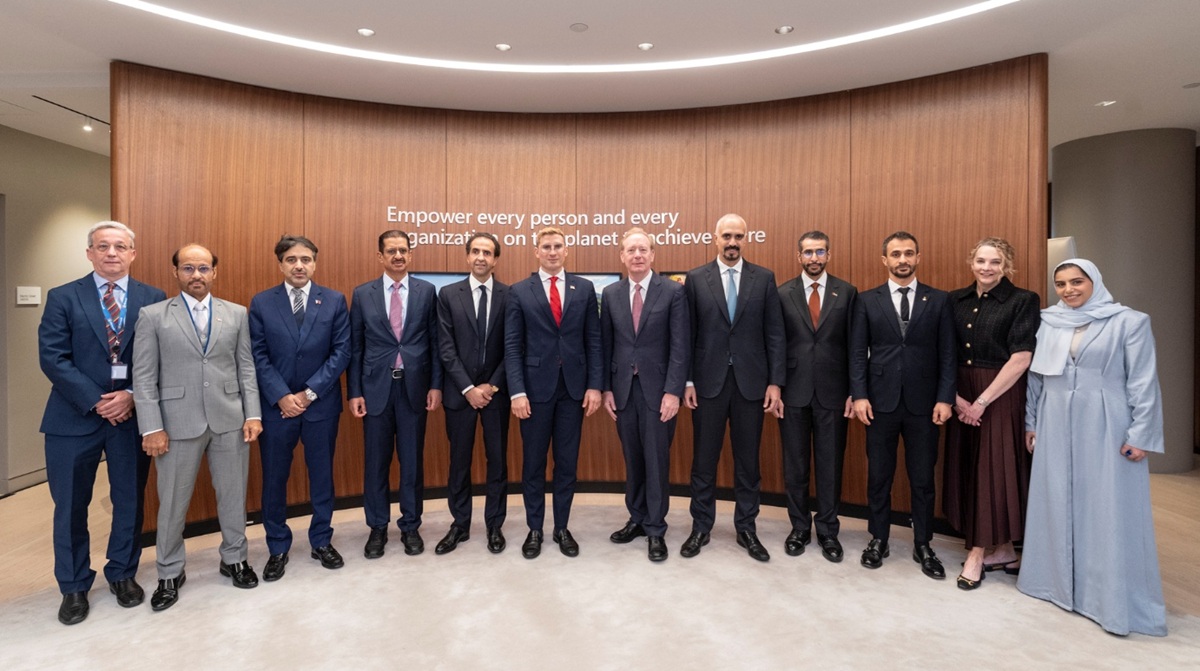
The announcement was made by Microsoft Vice Chair and President Brad Smith and Microsoft Middle East and Africa President Naim Yazbeck, who unveiled a long-term strategy designed to help governments and organizations accelerate digital transformation while building secure and resilient foundations for AI-driven growth.
The framework comes as countries across the Middle East pursue ambitious national agendas focused on economic diversification, digital innovation, smarter public services, and technology-led development. Microsoft said the region has an opportunity to become a global leader in AI adoption, but achieving that goal will require strong digital infrastructure, trusted cybersecurity capabilities, and reliable continuity measures.
As part of the initiative, Microsoft plans to expand cloud and AI infrastructure across Kuwait, Qatar, Saudi Arabia, and the UAE. The investment will support increased capacity, long-term infrastructure commitments, and broader access to advanced cloud services that enable organizations to deploy analytics and AI workloads at scale.
The company is also deepening partnerships with governments and national AI champions throughout the region. These collaborations include organizations such as HUMAIN, G42, QAI, and the Government of Kuwait, as well as support for digital government initiatives including TAMM in the UAE, SDAIA’s ALLaM platform in Saudi Arabia, TASMU in Qatar, and Microsoft 365 Copilot adoption across Kuwait’s government sector.
Brad Smith said Microsoft’s economic ties to the Middle East run deep and remain central to the company’s vision for the future. He noted that the region has a significant opportunity to lead in the AI era and said Microsoft has a responsibility not only to invest in technology, but also to strengthen the resilience, security, and continuity that sustainable digital progress depends on.
According to Smith, the framework reflects Microsoft’s commitment to helping countries translate AI ambitions into lasting economic and societal benefits. He emphasized that long-term success will require trusted partnerships, resilient infrastructure, and secure digital environments capable of supporting innovation at scale.
Naim Yazbeck highlighted Microsoft’s presence in the Middle East for more than three decades, describing the region as an active participant in shaping the future of AI. He said countries across the region are increasingly developing their own innovation ecosystems and national capabilities, creating new opportunities for businesses, governments, and communities.
A key pillar of the framework focuses on digital resilience. Microsoft plans to launch a Middle East Digital Resilience initiative aimed at helping organizations strengthen preparedness, continuity, and recovery capabilities. The program will provide resilience assessments, reference architectures, readiness guidance, and enablement support to improve operational resilience.
The company also plans to invest more than $400 million in subsea and terrestrial connectivity infrastructure across the Middle East by 2030. The investment builds on projects such as the SeaMeWe-6 subsea cable system, which includes landings in Qatar, Saudi Arabia, and the UAE. Microsoft believes enhanced connectivity will play an important role in supporting growing demand for cloud services and AI applications.
To address concerns surrounding data sovereignty and security, Microsoft will expand data protection, privacy, and business continuity commitments throughout the region. Eligible governments and organizations will gain access to capabilities backed by Microsoft Sovereign Public Cloud, Sovereign Private Cloud, and Project Digital Shield.
Cybersecurity remains another major focus area. Microsoft is expanding cooperation with national cybersecurity authorities across Kuwait, Qatar, Saudi Arabia, and the UAE. These efforts will be supported by dedicated Microsoft cybersecurity champions in each country, helping strengthen cyber defenses and promote secure digital transformation.
The company is also advancing responsible AI through collaboration with the Responsible AI Future Foundation, co-founded with G42 and the Mohamed bin Zayed University of Artificial Intelligence. The initiative aims to support governance frameworks, evaluation tools, and responsible AI practices across the region.
Beyond technology investments, Microsoft is continuing to prioritize people and skills development. Building on its commitment to help skill more than 4.2 million people across Kuwait, Qatar, Saudi Arabia, and the UAE by 2030, the company will expand investments in AI literacy, workforce readiness, leadership development, and public sector capability building.
Through this framework, Microsoft aims to combine global cloud and AI expertise with trusted security capabilities and deep local partnerships. The company believes these investments will help accelerate innovation, strengthen public services, improve resilience, create new economic opportunities, and support national visions across the Middle East.
The strategy also reinforces regional collaboration, encouraging innovation ecosystems that support sustainable digital growth for future generations.