









Dell Technologies has unveiled a broad range of enhancements to the Dell AI Factory with NVIDIA, introducing new AI solutions, ecosystem integrations, deskside agentic AI platforms, and purpose-built infrastructure designed to help enterprises move agentic AI from experimentation to large-scale production. The announcement comes as organizations increasingly seek practical ways to deploy AI while maintaining control of their data, costs, and operations.
The Dell AI Factory with NVIDIA continues to gain momentum, now supporting more than 6,500 customers worldwide, up from 5,000 in the previous quarter. The growth highlights rising enterprise demand for integrated AI platforms that simplify deployment and deliver measurable business outcomes.
Industry analysts expect agentic AI to become the largest enterprise AI workload by 2028, growing significantly faster than traditional generative AI over the next decade. While AI adoption is accelerating, many organizations remain challenged by proving return on investment. Dell notes that 59% of enterprises still cite unclear ROI as the primary obstacle to AI deployment, while 83% prioritize end-to-end vendor support across the AI lifecycle when selecting technology partners.
At the same time, AI economics are rapidly evolving. Although inference costs are expected to decline by more than 90% by 2030, agentic AI workloads are predicted to drive a dramatic increase in token consumption. As organizations balance performance, governance, and costs, Dell argues that owning AI infrastructure provides greater control and long-term financial benefits than cloud-only approaches. According to Dell, the Dell AI Factory can be up to 90% more cost-effective than public cloud services over a two-year period.
To help organizations accelerate AI adoption, Dell continues to expand its ecosystem of validated AI solutions. Reflection’s Beam open-weight model is now validated on the Dell AI Factory with NVIDIA, providing enterprises with an Apache 2.0-licensed frontier model optimized for software engineering and long-horizon agentic AI tasks.
The company has also introduced new and enhanced validated solutions through the Dell AI Ecosystem Program, supporting key enterprise use cases such as AI observability with Dynatrace, knowledge assistants and agentic AI platforms with Mistral, and computer vision solutions powered by Fogsphere. Dell has also expanded operating system options with the addition of SUSE Linux, giving organizations greater flexibility across the AI software stack.
Security remains a critical focus as enterprises deploy autonomous AI agents. Dell is introducing a layered security architecture built on the Dell AI Factory with NVIDIA, integrating Red Hat AI Factory software and the NVIDIA OpenShell Reference Architecture. The framework combines hardware-rooted security, runtime governance, orchestration, and policy management to help organizations run AI agents securely at enterprise scale.
Beyond technology, Dell is expanding its managed services portfolio to support organizations throughout their AI journey. Dell Managed Services for AI helps customers optimize resource utilization, govern access, and manage AI consumption and spending while maintaining centralized oversight and control.
Dell is also extending agentic AI capabilities directly to the desktop. With many organizations already exploring AI-enabled PCs, the company has expanded Dell Deskside Agentic AI with new validated deployment templates that simplify scaling agentic workloads. These reference architectures include hardware, AI models, and software stacks tailored for use cases such as agentic coding, higher-education AI labs, and advanced NVIDIA-powered AI workflows.
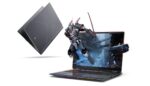
The company also announced new Dell Pro Precision systems designed for local AI development. The Dell Pro Precision with GB10 will offer a 64GB unified memory configuration aimed at developers and smaller teams, while the Dell Pro Precision with GB300 brings significantly higher capacity and performance for demanding AI applications and large-scale workflows.
To support growing AI workloads at the infrastructure level, Dell unveiled several new platforms. These include the Dell Modular Data Center with NVIDIA DSX POD, a containerized AI infrastructure solution that combines compute, storage, networking, power, and liquid cooling in a factory-integrated deployment model.
Additional innovations include the Dell PowerEdge M9882 server featuring NVIDIA Vera CPUs for agentic workload execution, the Dell PowerEdge R8822 server optimized for mainstream enterprise AI environments, and the Dell PowerEdge XE9810 server designed to deliver high-throughput inference at scale.
Dell is also targeting telecommunications providers with new NVIDIA Aerial RAN Computer platforms running on Dell PowerEdge servers, enabling AI and network workloads to share infrastructure while reducing operational complexity and total cost of ownership.
Michael Dell, Chairman and Chief Executive Officer of Dell Technologies, said AI infrastructure has evolved far beyond a traditional IT investment. According to Dell, organizations increasingly view AI platforms as engines for business growth, productivity, and competitive advantage. Through its continued collaboration with NVIDIA, Dell aims to provide enterprises with the integrated platforms, services, and infrastructure needed to transform agentic AI from experimentation into real-world business value.