









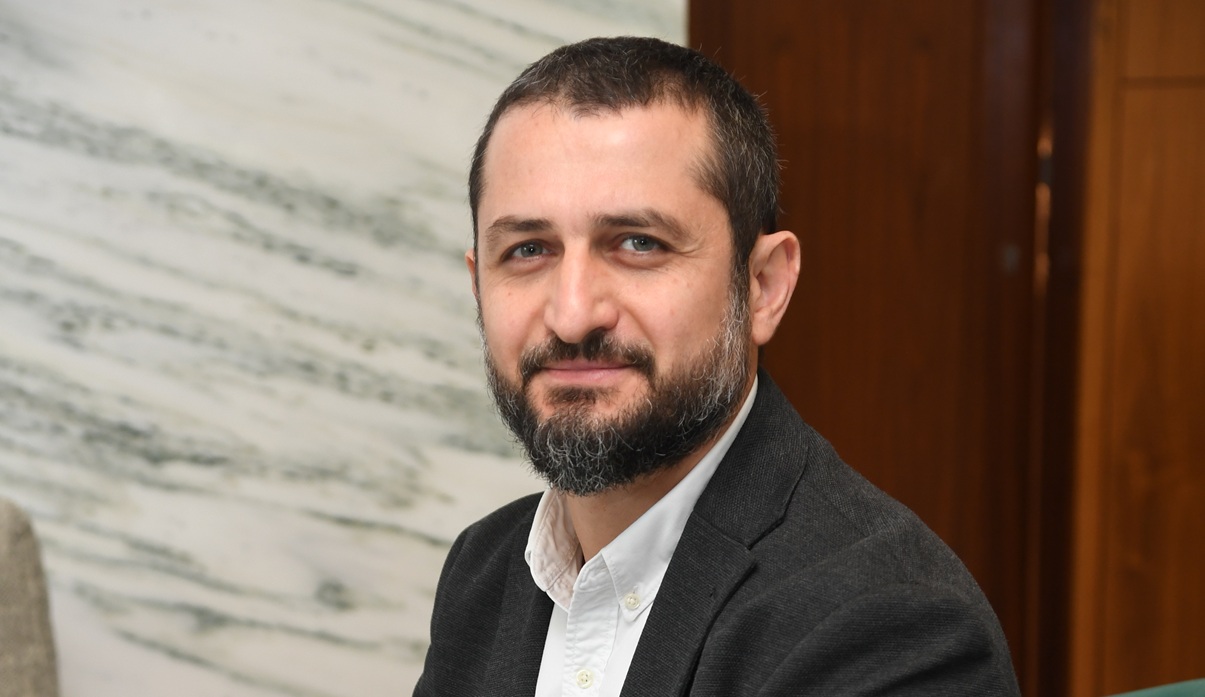
Elias Tsapsidis, General Manager for ESET Middle East, Greece, Cyprus & Malta, emphasises that ESET’s AI‑native PROTECT Platform, new XDR and cloud‑workload capabilities, stronger investigations, regional threat insights, and expanded partner enablement to help Saudi organisations improve visibility, resilience and response across modern environments.
How is ESET using LEAP 2026 to showcase its latest advancements in AI-powered prevention, detection, and response technologies?
LEAP 2026 provides the opportunity to showcase how the presence of AI can make cybersecurity both more proactive and easier to operate. The key focus is our ESET PROTECT Platform, which combines AI-native prevention, advanced XDR, threat hunting, incident investigation, and automated response with a unified environment. The event will give customers and partners a direct seat to see these capabilities in action through live demonstrations, and discussions with our regional security specialists.
We are also highlighting major 2026 enhancements such as ESET Cloud Workload Protection, which extends visibility and protection to virtual machines in AWS, Azure and Google Cloud; richer Incident Graphs and advanced investigations; AI-generated analysis from ESET LiveGuard Advanced; and broader integration of ESET AI Advisor within the ESET PROTECT console. Together, these developments help security teams move from isolated alerts toward contextual, faster decision-making across endpoint and cloud environments.
With cyberattacks rising across the Middle East, what specific challenges is ESET addressing for enterprises and government entities in Saudi Arabia?
Organisations in Saudi Arabia are dealing with various pressures collectively: a larger attack surface created by cloud and digital-service adoption, increasingly sophisticated ransomware and social-engineering campaigns, greater exposure through third parties and identities, and the emerging security risks associated with AI adoption.
H1 research conducted by ESET highlights how promptly attackers are adapting: ClickFix detections more than doubled compared to H2 2025, QR Code phishing reached record levels, ransomware groups continued using EDR-killing tools, and malicious AI skills are becoming a new software supply chain risk.
For Saudi enterprises and government organisations, there is also a strong regulatory dimension. The Kingdom continues to strengthen requirements through the Essential Cybersecurity Controls, Cloud Cybersecurity Controls, Critical Systems Cybersecurity Controls and Operational Technology Cybersecurity Controls. Our role is therefore not simply to detect malware, but to help organisations improve visibility, protect endpoints and cloud workloads, accelerate investigation and response, and build operational resilience across increasingly complex environments.
ESET PROTECT continues to evolve rapidly — what new AI-native or XDR enhancements are you unveiling at LEAP this year?
Among the capabilities we are highlighting are several important 2026 developments in the ESET PROTECT Platform. ESET Cloud Workload Protection extends the platform beyond conventional endpoints and servers to cloud virtual machines, adding cloud telemetry into the same detection-and-response environment. We have also enhanced Incident Graphs and Advanced Investigations so analysts can see an attack’s entry point, progression, affected identities and related activity much more clearly.
On the AI side, ESET LiveGuard Advanced now provides richer AI-generated behavioural reporting alongside autonomous remediation, while ESET AI Advisor is integrated more directly into ESET PROTECT to help analysts interpret incidents using natural-language interaction. ESET PROTECT 7.2 has taken this further with AI-driven recommended response actions within incidents. The goal is not automation for its own sake; it is to reduce investigation time and alert fatigue while keeping security professionals informed and in control.
Saudi Arabia is one of the fastest-growing cybersecurity markets. How is ESET strengthening its channel ecosystem to support partners across the Kingdom?
Saudi Arabia is a strategic growth market for ESET, and the channel is fundamental to our expansion strategy. We are increasing technical enablement, sales support and joint go-to-market engagement so distributors, resellers, system integrators and service providers can address more complex enterprise requirements rather than focusing only on traditional product resale.
That means helping partners build expertise around areas such as ESET PROTECT, XDR, MDR, cloud security and threat intelligence. ESET’s wider partner framework supports that transformation through technical and sales certification, deal registration, marketing-development support, sales tools and recurring-service models. The ESET Authorized Training Center also provides formal certification paths for sales, technical pre-sales and support teams. The broader objective is to help Saudi partners become trusted cybersecurity advisers with the skills to design, deliver and operate modern security environments.
What new opportunities do you see for distributors and resellers as organisations in KSA accelerate cloud adoption and modernise their security operations?
The opportunity is shifting from individual security products toward continuous security services. As Saudi organisations move workloads to the cloud and adopt XDR and managed detection and response, partners can build recurring-revenue practices around security operations, threat hunting, cloud protection, vulnerability management and ongoing optimisation.
This also changes the role of the reseller. Customers increasingly need help integrating security across endpoints, cloud environments and identities, interpreting threat intelligence, meeting regulatory requirements and operating technologies such as XDR effectively. ESET Cloud Workload Protection, for example, creates opportunities for partners to extend protection into AWS, Azure and Google Cloud while managing endpoint and cloud visibility through the same platform.
ESET’s MSP model is designed for this transition with features such as multitenancy, integrations, automation, flexible consumption and recurring billing. For the channel, that creates opportunities to move from transactional licensing toward longer-term managed and advisory relationships.
How would you describe the current Saudi cybersecurity market landscape, and what key trends are shaping customer priorities in 2026?
Saudi Arabia has developed into a substantial and increasingly sophisticated cybersecurity market. According to the National Cybersecurity Authority, cybersecurity spending reached SAR 15.2 billion in 2024, up 14% year on year. Private-sector organisations accounted for 68% of spending, and the cybersecurity workforce exceeded 21,000 specialists. Importantly, spending is almost evenly divided between products and services, showing that organisations are investing not only in technology but also in operational capability.
In 2026, we see priorities converging around five themes: stronger endpoint and network security, greater use of XDR and managed security operations, secure cloud adoption, protection of data and critical infrastructure, and increasingly, governance and protection around AI. Regulatory maturity is also driving purchasing decisions through frameworks such as ECC 2-2024, the updated Cloud Cybersecurity Controls and OT-specific requirements. The market is therefore moving from basic prevention toward continuous resilience, visibility and response.
What are ESET’s growth plans for Saudi Arabia in 2026, and how will your investments in technology, partnerships, and talent shape your expansion in the Kingdom?
Saudi Arabia is a strategic growth market for ESET Middle East, and our focus in 2026 is on strengthening our presence in the Kingdom through continued investment in our channel ecosystem and access to the latest cybersecurity technologies. We are expanding technical enablement, sales support and joint go-to-market initiatives to give distributors and resellers the expertise and resources they need to deliver modern cybersecurity solutions to organisations across Saudi Arabia.
Technology will remain another important part of that strategy. ESET continues to advance AI-native security, XDR and next-generation threat detection through the ESET PROTECT Platform, helping organisations improve visibility, simplify security operations and respond more effectively to increasingly sophisticated threats. At a global level, ESET has also announced a €40 million investment in AI-powered cybersecurity, focused on security-specific AI models, a layered AI security architecture and a new generation of AI-enabled security operations.
Our objective in Saudi Arabia is to combine that continued technology innovation with a stronger partner ecosystem, enabling customers to adopt advanced cybersecurity capabilities as the Kingdom’s digital infrastructure and services continue to expand.