










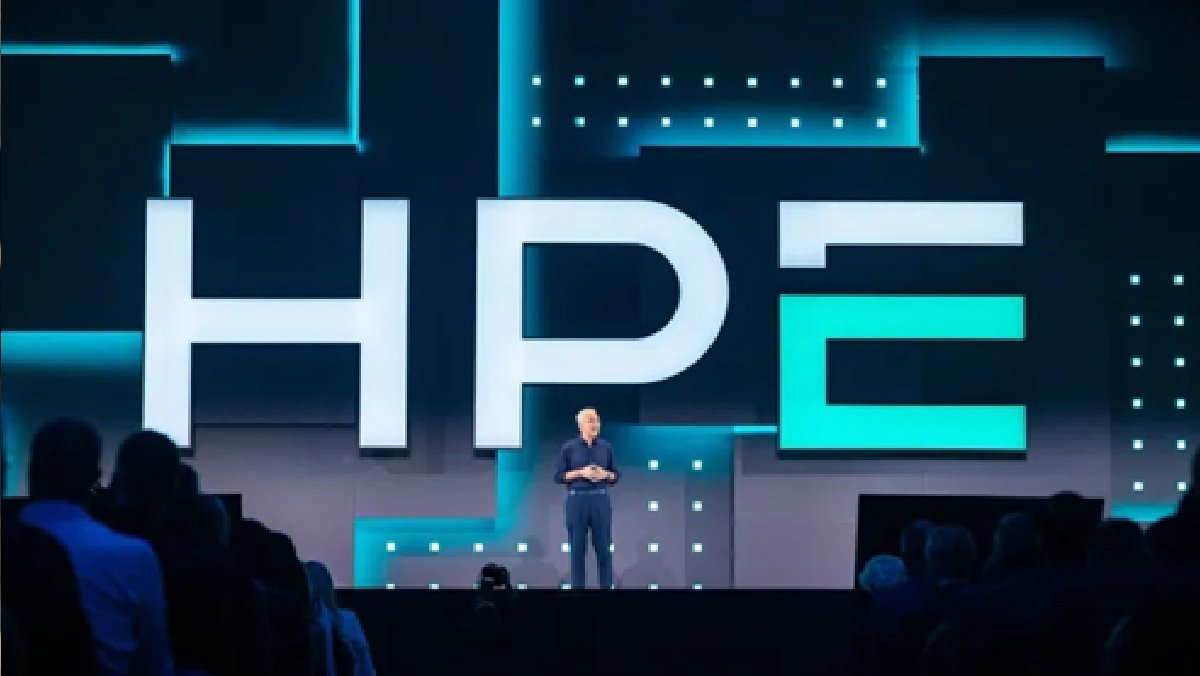
Hewlett Packard Enterprise (HPE) recently outlined its vision for the future of enterprise technology at HPE Discover Las Vegas 2026, centred on enabling organisations to move from AI experimentation to full-scale production deployments. The company unveiled its vision for a new enterprise architecture purpose-built for agentic AI – one that supports the entire lifecycle of AI, from development and training to real-time operations at scale.
HPE brings together compute, storage, networking, and software to deliver secure, connected, intelligent infrastructure. In collaboration with NVIDIA, HPE announced advances to its AI Factory architecture that help organisations deploy AI agents with stronger governance, control, and observability, ensuring that AI can operate reliably and responsibly in production environments.
A year on from the acquisition of Juniper Networks, networking was a central theme of HPE’s announcements at HPE Discover. HPE expanded its self-driving networking portfolio across the edge, campus, data centre, and AI factory environments, introducing AI-driven automation that can detect, diagnose, and remediate issues in real time. Most notably, the alignment of HPE Aruba Central and HPE Mist AI, through shared agentic capabilities, common hardware, and consistent AI-native operations, represents a major step in HPE’s “cross-pollination” strategy to bring together the HPE Aruba Networking and HPE Juniper Networking portfolios. The goal is to reduce operational complexity while delivering the performance and scale needed for increasingly distributed AI workloads.
HPE also introduced a unified operations model through GreenLake and HPE Morpheus Software, delivering a single control plane for hybrid IT and AI environments. Enhancements such as GreenLake Intelligence are designed to help coordinate and govern AI agents, while expanded observability capabilities aim to improve performance visibility, cost management, and automated issue resolution.
Taken together, the announcements reflect HPE’s push to move customers beyond fragmented AI deployments toward a cohesive model where infrastructure, networking, data, and operations are designed to work as one. HPE emphasised security, sovereignty, and scalability as critical requirements for deploying AI in trusted environments while retaining control over data and operations.
These and more announcements from this year’s HPE Discover Las Vegas position the company as a leader in enterprise architecture for agentic AI, delivering a comprehensive technology foundation that combines intelligent infrastructure, autonomous operations, and enterprise-grade security to help organisations operationalise AI at scale.