










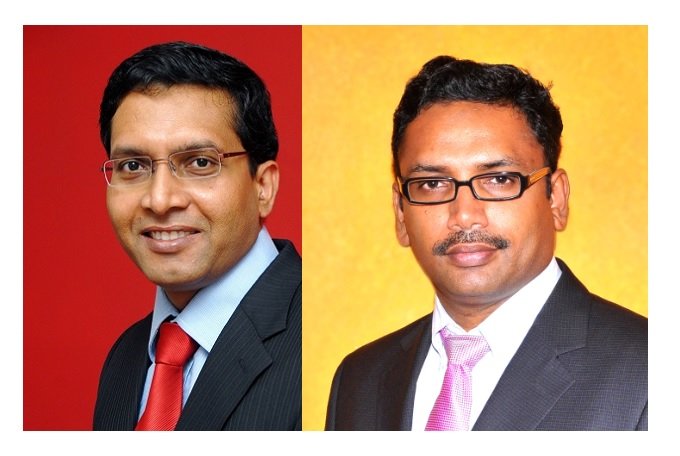
Channel Post spoke to Rajat Mohanty, the CEO at Paladion Networks and Firosh Ummer, the MD for EMEA at Paladion Networks, about the security trends in the Middle East, the ways to tackle them, and the company’s channel strategies in place

Please tell us something about the security trends you have seen in the Middle East.
Rajat Mohanty: Compared to Asia, the Middle East region has not actually seen so many security attacks. Security attacks are still at the lower stage and this has happened over the last two to three years.
In countries such as India, attacks were probably happening at very consistent rates. However, there wasn’t a spike in the number of attacks, where we saw the number of instances suddenly increase.
But Middle East has seen that happening over the last couple of years where we see the rate of attacks have dramatically increased.Today the rate of change of these attacks in the Middle East is probably higher than what we have seen in the US or European markets. Due to this the investment in combating these threats has also increased in the Middle East.
According to you, are companies aware of the existence of such threats?
Firosh Ummer: Yes, of course. We see many events in the region being held to highlight key security issues – such as the Gartner Security Summit and several other events across the region.
We also see lots of awareness on the eGovernance front to bolster their security solutions in place to address these security issues. In other markets eGovernance initiatives do not usually get paired with eSecurity. Here it is different. eGovernance initiatives are always paired with eSecurity initiatives.
Which sectors in the region are driving the demand for security solutions?
Firosh Ummer: Banking sector is one of the biggest industry sectors that is driving the demand for such services. Telcos are also investing a lot due to the fact that they store and access citizen data all the time. Off late, the retail sector has also started investing in security solutions, especially with most retailers going live with their eCommerce initiatives.
Do BYOD and wearable devices pose a new level of security threat to a corporate network today?
Rajat Mohanty: Frankly speaking, it’s just a hype that BYOD is being adopted by the corporate sector. There no susbtantial implementation in place in order to judge the security threats involved.
In my opinion, this is a futuristic trend to be worried about. May be in the next 3-4 years time, companies will probably see IoT and BYOD coming into the corporate network and they will then start assessing and worrying about security threats involved.
What sort of channel strategies do you have in place?
Rajat Mohanty: We do not work with a channel on most of the services and products we provide currently. However, during the first quarter of 2015, we plan to launch a cloud-delivered solution, for which we will work through a reseller network.
Firosh Ummer: We haven’t started recruiting channel partners for the solution, but we intend to start soon on the planning of the launch and the delivery of the solution.
What is the target market for Risqvu and how is it doing in the market?
Rajat Mohanty: Risqvu is meant for the top tier customers to provide them with more intelligence about their security solutions in place. The product is actually a mechanism that combats banking and financial fraud analytics.
The tool helps to detect banking transaction patterns based on examples defined by forensic analysts. Lots of our existing customers have started using this solution and we see good demand and feedback from them.